
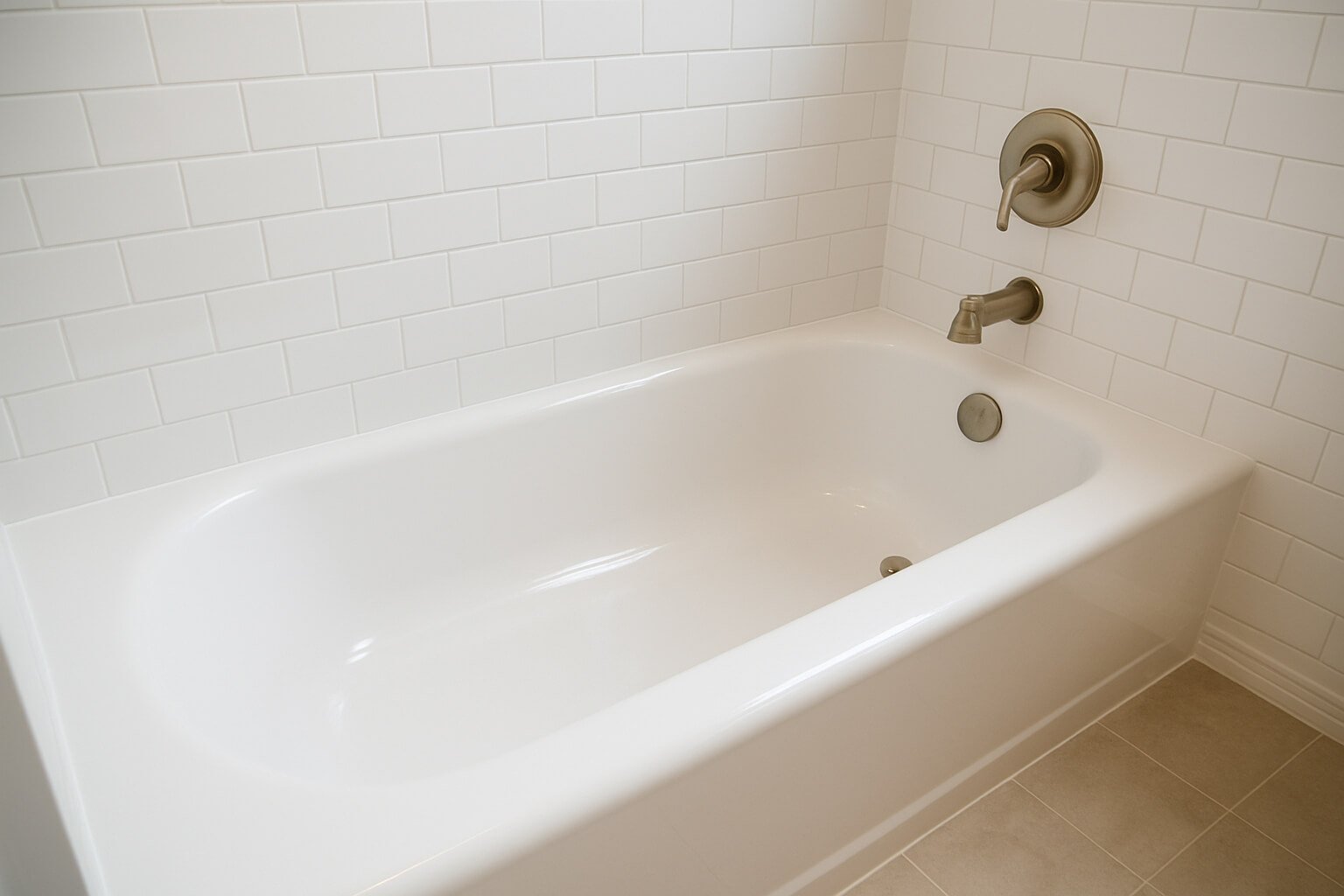
When your bathroom starts to feel outdated, it doesn’t always mean a full renovation is the only way forward. One of the most practical and cost-effective ways to bring new life into your bathroom is through bathtub porcelain refinishing. This process has quickly become popular among homeowners who want a fresh, modern look without the high costs of replacement.
In this guide, we’ll explain what refinishing is and walk you through the step-by-step process. We’ll also cover costs, benefits, maintenance, and how long you can expect results to last.
*Note: The terms reglazing, refinishing, and resurfacing all refer to the same professional restoration process.
By the end, you’ll know exactly whether bathtub porcelain refinishing is the right choice for your home.
What Is Bathtub Porcelain Refinishing?
Many homeowners wonder what this process really involves and whether it’s truly different from terms like resurfacing or reglazing. Let’s start with the basics.
Definition and Key Benefits
Bathtub porcelain refinishing is the professional process of restoring the surface of your existing bathtub. The steps usually include:
- Deep cleaning and sanding the surface to remove soap scum, dirt, and rust.
- Etching the porcelain lightly means creating a fine roughness on the tub’s surface so that primers and coatings can grip securely and last longer.
- Applying a primer to prepare the tub.
- Spraying epoxy or urethane coatings for a smooth, durable finish.
The benefits are big: your tub looks brand new, you save thousands compared to replacement, and you extend the usable life of your tub by a decade or more.
Why Refinish a Porcelain Bathtub Instead of Replacing It?
Replacing a bathtub isn’t just expensive—it’s also disruptive and messy. Refinishing, on the other hand, brings fresh results with less stress.
Cost Savings Compared to a New Tub
A typical bathtub porcelain refinishing project costs between $700 and $999. Compare that to full replacement, which often ranges from $1,500–$5,000 once you factor in demolition, disposal, plumbing, and installation. The math is clear: refinishing saves thousands.
Extending the Lifespan of Your Bathtub
Refinishing doesn’t just improve looks—it adds 10 to 15 years of extra life to your tub. With proper care, it’s almost like hitting the reset button on your bathroom centerpiece.
Eco-Friendly and Less Invasive
- No heavy demolition.
- Minimal waste compared to sending an old tub to a landfill.
- Less dust, noise, and mess inside your home.
It’s the greener, cleaner choice.
Bathtub Porcelain Refinishing Process Step by Step
So how exactly does the magic happen? Here’s what professionals do to make your tub look brand new.
Preparation: Cleaning, Etching, and Sanding
First comes the prep work: removing soap scum, oils, rust, and mineral deposits. Sanding or etching helps the surface bond better with primers and coatings. Skipping this step leads to peeling or chipping later.
Applying Primer and Epoxy Coating
Next, a specialized primer is applied to lock onto the porcelain. Then, professionals spray multiple layers of epoxy or urethane glaze. This creates a smooth, even finish that’s durable and waterproof.
Drying and Curing Time for Best Results
Patience pays here. While the surface may feel dry within a few hours, curing takes 24–48 hours. Using the tub too soon risks fingerprints, smudges, or peeling.
Bathtub Reglazing Cost: What to Expect
Naturally, many homeowners want to know about bathtub reglazing cost before committing.
Professional Reglazing Cost Range
On average, professional reglazing runs $700 and $999. Prices vary by region, tub size, and current condition. Extra repairs, like fixing chips, may increase the bill.
DIY Kits and Their Limitations
DIY kits cost $30–$150, but results often fall short. Common problems include uneven coatings, peeling, and poor durability. Professionals use industrial-grade sprays and ventilation systems for safety and quality that DIY just can’t match.
Hidden Costs to Consider
Don’t forget additional costs such as:
- Safety gear and ventilation equipment.
- Surface repairs before reglazing.
- Repainting bathroom walls if overspray occurs.
These hidden factors often make DIY less appealing than hiring pros.
How Long Does Bathtub Refinishing Last?
One of the most common questions about bathtub porcelain refinishing is how long it holds up.
Durability and Maintenance Tips
With the right care, refinishing lasts 10–15 years. Tips include:
- Use non-abrasive cleaners.
- Avoid bleach or harsh chemicals.
- Keep sharp objects away from the tub surface.
Common Mistakes to Avoid
- Skipping surface prep.
- Applying too thick a coating.
- Using the tub before it’s fully cured.
Signs It’s Time to Refinish Again
- Discoloration or yellowing.
- Peeling or flaking topcoat.
- Chips that expose the original porcelain.
Is Bathtub Porcelain Refinishing Worth It?
Let’s weigh the pros and cons.
Pros and Cons Compared
Like any home improvement option, bathtub refinishing comes with its advantages and limitations—here’s a quick look at the pros and cons.
Pros:
- More affordable than full tub replacement
- Quick process (often done in one day)
- Eco-friendly since it reuses your existing tub
- Long-lasting finish (adds 10+ years of use)
Cons:
- May require touch-ups after years of use
- The coating process involves fumes (needs ventilation)
- The finish can be scratched by harsh cleaners or abrasives
When to Refinish vs Replace
If your tub is in good shape but looks dull or outdated, refinishing is the best way to restore its appearance without the cost of replacement.
However, if the tub is cracked, leaking, or badly damaged, replacement is the smarter choice since refinishing can’t fix major structural issues.
Bringing Your Porcelain Tub Back to Life
Bathtub porcelain refinishing is a smart, affordable, and eco-friendly way to restore your bathroom centerpiece. Whether you need to resurface a porcelain bathtub with chips and scratches or go for a porcelain tub reglazing to bring back the shine, this process delivers results that look like new. You’ll save thousands compared to replacement, avoid the chaos of demolition, and enjoy your tub for another decade or more.
Tile Floor Refinishing
Tile floor refinishing follows the same process as bathtub refinishing — cleaning, etching, priming, and applying durable coatings for a renewed finish.
The only difference is that we remove any doors in the room before beginning work to ensure full coverage and smooth application.
It’s an efficient, cost-effective way to bring new life to your bathroom or kitchen floors without the hassle of replacement.
When your tub shows signs of wear, don’t rush to replace it. Instead, consider the beauty and practicality of bathtub porcelain refinishing. Ready to restore your bathroom centerpiece? Contact us today and bring your porcelain tub back to life.